


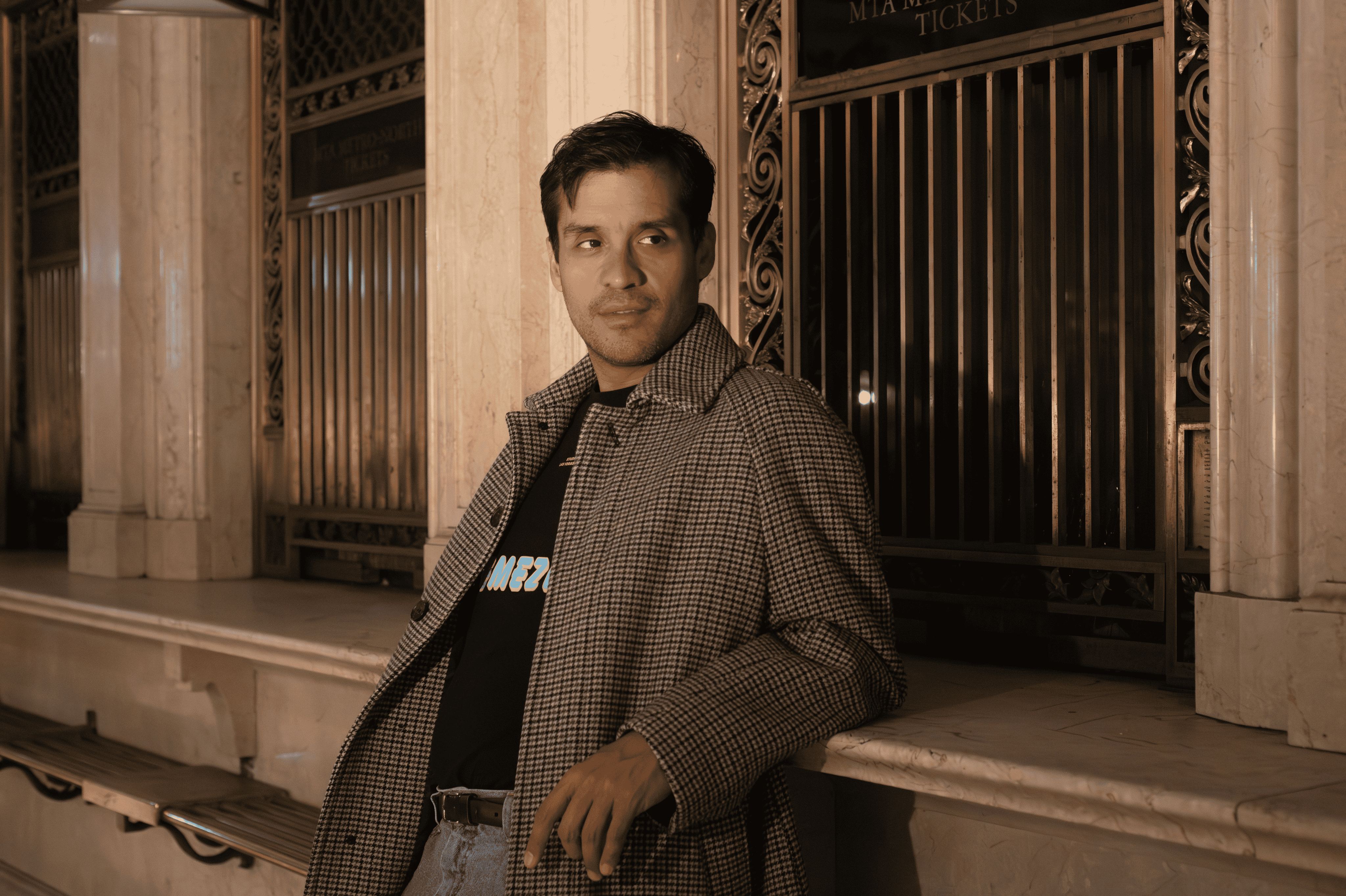
“This is an ‘anti-album,’ and there isn’t necessarily a single concept connecting all the songs.” This is how El David Aguilar defines Vigente, his latest project. An album that brings together songs made by instinct, with a free-spirited approach evident in the forms, collaborations, and nuances of each of the 15 tracks.
This time around, he is joined by artists as diverse as Jay de la Cueva, Voyou, Mauricio Díaz “El Hueso,” Julieta Venegas, and even Aguilar’s own parents, who bring an intimate and transcendent quality to his art.
With Venegas, he sings Lo Que Por Ti Yo Siento, which was released with an accompanying music video. The song was born from a particularly sensitive experience. After attending the funeral of Adán Jodorowsky’s brother, the Mexican artist found himself thinking about the song he would have liked to sing at that moment. Some time later, the singer and fellow Mexican intuitively chose the track from several options and ultimately helped him take it in a new direction.
With Vigente now available on all digital platforms and his first official U.S. tour on the horizon, El David Aguilar is entering a new stage that seems to look ahead without letting go of what came before. Violeta Parra, Silvio Rodríguez, Atahualpa Yupanqui, José Alfredo Jiménez, and Chavela Vargas remain part of the roots from which he approaches songwriting, but with models that grow, adapt to the times, and connect.
His search involves using that tradition as fuel to find an identity of his own that feels contemporary. “I’m not interested in having an audience simply for the sake of having one. I’m interested in finding the right audience—the audience that truly belongs with what I do,” he said in a conversation in which he opened his heart and showed why he has been generating so much buzz.
After moving through different chapters of your career with albums like Siguiente, Reciente, and Agendas Vencidas, what does Vigente represent in your story? Does it feel like a destination, a new beginning, or both?
I see it as a reaffirmation—a place I’ve arrived at and, at the same time, a new starting point. With Vigente, I feel like I’m reaffirming my concept of the “anti-album.” I’m saying, and almost stubbornly insisting, that what I believe in is “free songwriting.”
At the same time, because of the collaborations and the kinds of songs it contains, I feel it marks a turning point, as I’m taking more risks. There are some very complex songs on the album, while at the same time there are about five that I feel can connect with people on a much broader level.
To me, it feels like a big album and that there’s something for everyone. That’s what Vigente represents to me.
On this album, you once again transform deeply personal experiences into songs that resonate with so many people. At what point do you realize that an emotion is no longer yours alone and is ready to become music?
I try to identify which emotions could also be experienced by my friends, my family, or the people close to me. I try to read that, and from there, I begin to identify which ideas I think can cross that line and become a song.
It’s a delicate process that requires a lot of introspection, reflection, and observation. You also have to pay attention to songs and the trends surrounding them—to what songs are saying at any given moment.
For me, it’s important to keep an ear open and ask myself, “How is the conversation between songs and audiences happening right now?” I try to understand that relationship and figure out where what I want to say can fit within it.
.png)
Lo Que Por Ti Yo Siento speaks about a love that endures even after goodbye. What interested you most about exploring the idea of a love that continues, even as circumstances change?
I really like the idea that love can transcend the forms it takes. I believe love can endure and remain between two people who are no longer connected in the same way, because love is greater than the dynamics that exist between people. To me, love is, first and foremost, an expression of peace and respect.
So I believe that even when two people are no longer together, love can still exist. The past doesn’t simply disappear, and if that affection finds the right place within our memories, then love should still feel present there.
And when the goodbye is from this earthly life, love remains as well. I think that when we lose people, love becomes frozen in time and can even become a kind of garden. It begins to bear different kinds of fruit, transforming within our minds and emotions.
I believe love is a compass that we should follow in every direction because it brings peace and brightness to our days and allows us to live a little more happily and with more inspiration. For that alone, love is profoundly worthwhile. It’s what gives life meaning.
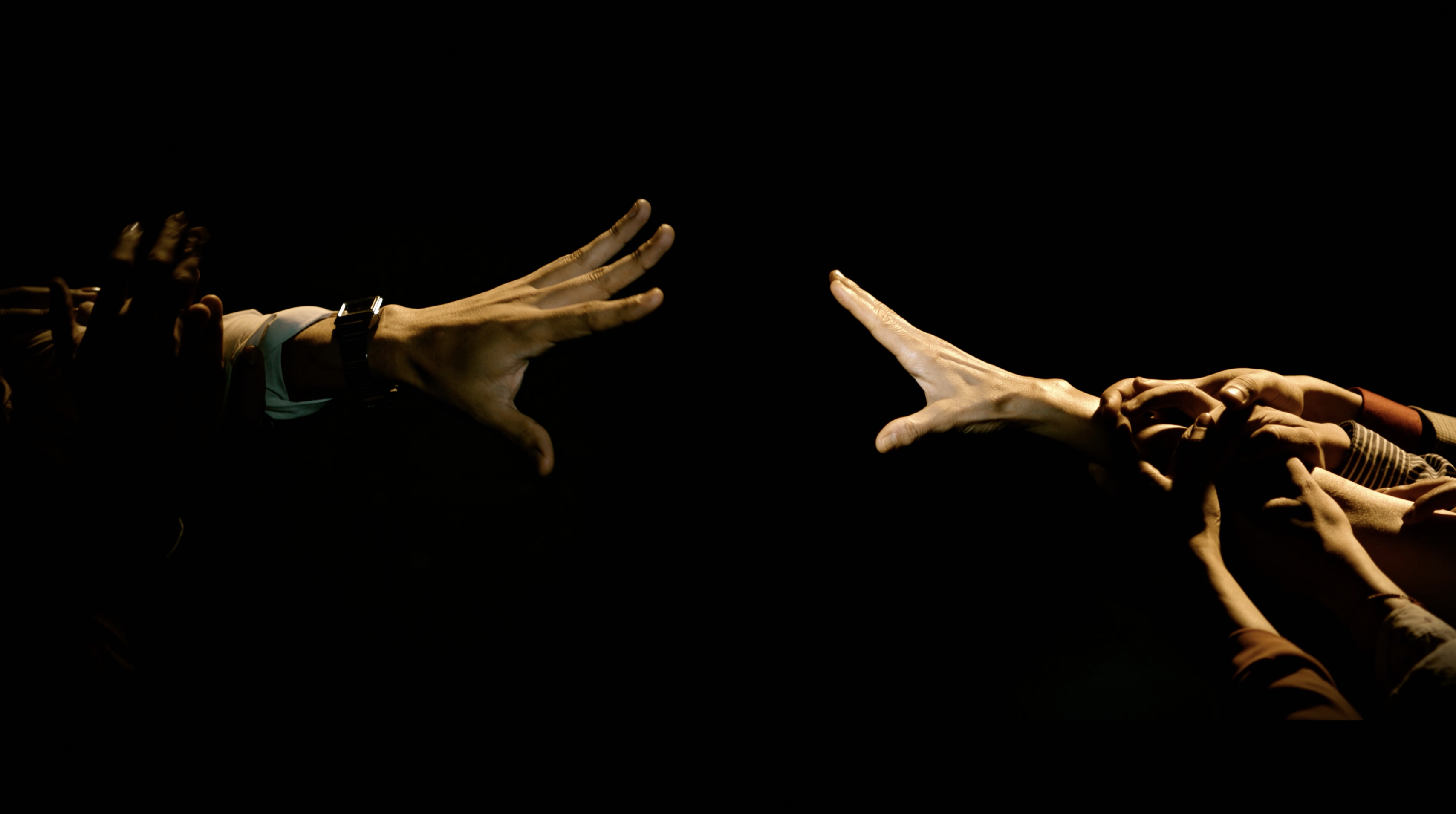
The music video for the song portrays two people trying to reach each other while a crowd constantly pushes them in opposite directions. What does that outside force represent to you, and how much do you think the circumstances around us can shape the way relationships unfold, especially when a goodbye isn’t entirely within our control?
I think both things play an important role, but there’s also the environment around us. Death, for example, isn’t something that happens because either person intended it to. In that sense, many goodbyes simply have to do with the way the world moves around us.
Of course, the emotional makeup of the people involved also plays a part, but I think our surroundings have a very important role—the circumstances, luck, the dynamics around us, the way the world changes, and all those small details that shift along the way.
That’s exactly what we tried to represent in the video: sometimes, we aren’t entirely the ones choosing to say goodbye. The world itself can also play a very important role in pulling two people apart.
Lo Que Por Ti Yo Siento is a deeply intimate song about love that remains even after goodbye. How did the collaboration with Julieta Venegas come together, and what made her the right artist to share this story with?
I gave Julieta four or five songs to choose from, and she intuitively chose this one. Once she became part of it, she really helped the song grow.
The song comes from the experience of attending the funeral of Adán Jodorowsky’s brother. That moment had already passed, but I was left wishing that I had had a song I could have sung there.
In a way, this song is the result of imagining that I could have traveled back in time and had it with me to sing at that funeral. Then Julieta came in, intuitively chose this particular song, and helped take it somewhere new.
Vigente features collaborations with artists from very different musical backgrounds, from Jay de la Cueva and Voyou to your own parents. How do you decide when a song needs another voice and when you prefer for it to remain entirely your own?
That’s also very intuitive for me. Some songs only work in solitude, while others have an openness to them, a space where another voice can come in or where a harmony or a different vocal tone can add something. Sometimes it’s also a matter of production.
In my case, it has always been very intuitive, even beyond whatever might be recommended from a production standpoint. If I become set on the idea of singing a particular song with someone because the thought of it makes me feel something, I’ll try it. If it works, great, and if it doesn’t, that’s okay too.
I surrender quite a bit to chance, and I like allowing chance to have a voice as well. With Vigente, I feel like life itself brought these collaborations to me. It wasn’t something I had planned; they simply happened along the way. It was all very circumstantial.
Your parents’ participation carries a particularly intimate meaning, since you have acknowledged that much of your musicality comes from them. What was it like to share the studio and a song with the people who are at the origin of your relationship with music?
It felt like bringing them into my professional world for the first time. They know about my work; they follow what I do and see what I share on social media, but they had never actually been in the studio with me before.
So there was something very intimate about having them experience that space—seeing how it works, meeting my collaborator, getting to know the studio itself, and ultimately recording together. For me, it was something incredibly meaningful on a symbolic level, and I think people will appreciate that as well.
In October, you’ll embark on your first U.S. tour. What does it mean to bring this album to American audiences and share this new chapter of your music in a country with such a diverse Latin music community?
It means having the opportunity to connect with a community that I consider a sister community to Mexico—one that has a great deal in common with us but exists within a different reality. I’m really interested in everything I can learn from that: discovering how people receive my music, how they experience a concert, and how they connect with the emotions that emerge in that space.
I also want to experience the atmosphere of each city through the context of performing there. I think it’s going to be a process of pure discovery and learning, and I’m truly honored to be embarking on my first official U.S. tour.
You’ve said before that you’re constantly writing songs, and that the real challenge comes later when it’s time to decide which ones belong on an album. Now that Vigente is complete, was there an important song that was left out simply because it didn’t belong to this particular story?
Yes, but mainly because I couldn’t make them fit rhythmically with the rest of the album. It’s not that I like the songs that were left out any less. In fact, there are some that I really love and still couldn’t include.
Even though this is an “anti-album” and there isn’t necessarily a single concept connecting all the songs, there still has to be a certain rhythm and balance between them. The way I decide which songs belong is very intuitive.
I think more than ten songs ended up being left out. Maybe some of them will eventually see the light of day on the next “anti-album,” which will be called Pendiente, or perhaps sometime after that. But I still have them there.
You’ve spent several years as a recurring presence at the Latin GRAMMY® Awards and have collaborated with some of the most respected songwriters in Spanish-language music. With that kind of career behind you, how do you continue writing from a place of curiosity rather than from the expectations that inevitably come with recognition?
By continuing to see myself as an artist and being clear about what being an artist means to me: having an honest relationship with writing, with music, and with whatever makes me feel alive. Focusing solely on the expectations of the market doesn’t make me feel alive.
In one way or another, we can’t avoid existing alongside the market and the audience, but in my case, I also try to challenge them and sometimes even make them uncomfortable with certain songs. Sometimes I like creating something that is completely anti-commercial, and other times I don’t.
I think you want people to feel like they can’t predict you. You want to be unpredictable. Those are the kinds of artists I personally like—the ones who don’t give me what I expect but instead betray those expectations and take me somewhere else.
I know that’s a particular way of seeing things that not everyone shares, and it can also mean losing certain audiences along the way. But I’m not interested in having an audience simply for the sake of having one. I’m interested in finding the right audience—the audience that truly belongs with what I do.
Your music draws from a long tradition of Latin American songwriting while still reflecting the time and place you’re living in. After Vigente and with this new tour underway, how do you approach that balance between carrying that tradition forward and finding your own identity within it?
I always keep one foot firmly planted in tradition—in Violeta Parra, Silvio Rodríguez, Atahualpa Yupanqui, José Alfredo Jiménez, Chavela Vargas... They left us a legacy to study and a foundation that we can draw inspiration from and reinterpret.
For example, I really enjoy thinking about José Alfredo Jiménez, choosing one of his songs and saying, “I could write a song inspired by something like this.” Or I can listen to a song by Silvio and admire his ability to observe and analyze a social landscape and think, “I like this because there’s another layer of depth within it.”
It’s not just about making songs that flirt with a trend; it’s also about remaining restless and curious. I think the Latin American tradition, and Latin American folk music in particular, is fundamentally confrontational in that sense. You don’t listen to Atahualpa Yupanqui and think, “He was wondering how this was going to sound on the radio.” No. You listen to him and think, “This man cared about nothing more than reaching straight into people’s emotions.” The same is true of Violeta Parra, Chico Buarque, or Brazilian artists working within their own musical language. I admire them and draw inspiration from them. Many of them barely even existed within the traditional music industry.
I try to live within the time, country, and environment that I was given. But I carry everything Latin American in my heart, and I try to use that tradition as fuel while also finding my own face, my own identity, within it.
USA TOUR DATES:
October 25, 2026 | Marquis | Denver, CO
October 28, 2026 | The Monarch | Ogden, UT
October 30, 2026 | SFJAZZ | San Francisco, CA
November 1, 2026 | Mondavi Center | Davis, CA
November 3, 2026 | The Echo | Los Angeles, CA
November 5, 2026 | Reggies | Chicago, IL
November 6, 2026 | Joe’s Pub | New York, NY
November 15, 2026 | Judson’s Live | Orlando, FL
November 17, 2026 | ZeyZey | Miami, FL
Connect with El David Aguilar on Instagram, Facebook, and YouTube.
.png)


