


.png)
On February 26, as Montreux Jazz Festival Miami expanded to the Miami Beach Bandshell for its third edition, the beachside run continued after a triumphant Miles Davis Centennial opening night, shifting from a celebration of legacy to a forward-looking booking, featuring drummer, producer, and composer Makaya McCraven.
McCraven’s band stepped onstage as builders of the present tense. The set began in a near-whisper. Makaya McCraven’s drums breathing. Junius Paul’s bass settling. Jahari Stampley’s keys shimmering. Marquis Hill’s trumpet testing space. No rush. A steady ascending groove was patiently constructed, but that restraint didn’t last. Within minutes, the pulse thickened, the interplay tightened, and the band leaned into a deep, elastic flow, building from subtle textures into stretches of intensity that felt earned rather than imposed.
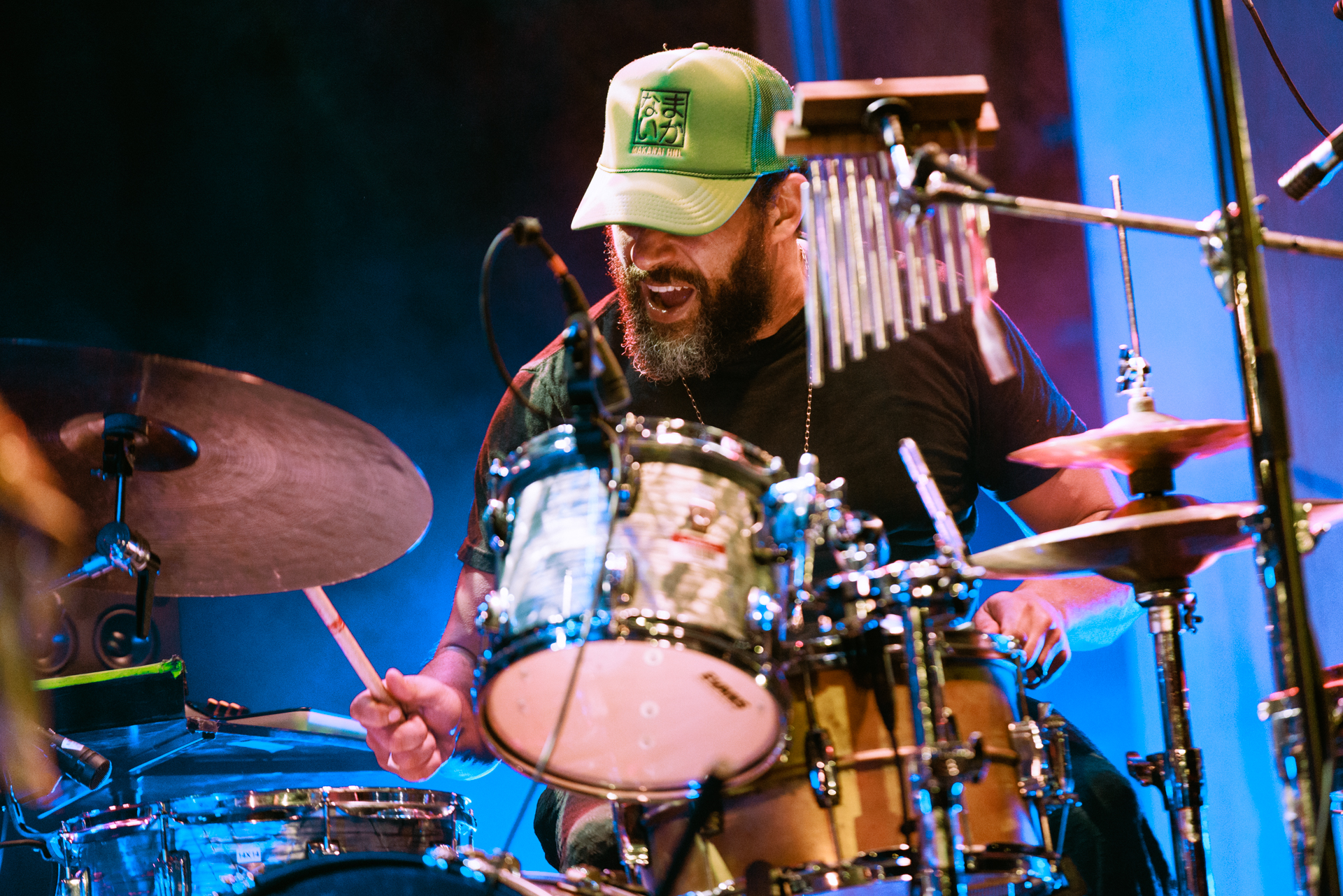
Midset, he offered his thesis. “Improvisation is the natural state of being. Every day, we wake up trying to figure this out in real time. That’s improvisation. That’s life.” His current project, Off the Record, a collection of four EPs drawn from live performances across Chicago, London, Brooklyn, Berlin, and Los Angeles, follows that same logic. It captures the moment and reshapes it later. Onstage, there is no reshaping. Only presence.
At one point, Miami interrupted. Sirens tore down Collins Avenue, a cluster of firetrucks rushing somewhere urgently. The open-air venue steps from the beach, ocean breeze moving through its shell, allowing the city to spill in. The band held the tempo, exchanged glances, and resisted the instinct to compete. They let the noise pass through the groove, keeping the beat steady until the chaos thinned out. Only then did they build momentum again. It felt less like a disruption and more like improvisation in action, musicians adjusting to the moment, absorbing the city rather than fighting it. For a few minutes, we were lucky enough to sit inside that pause, in a venue where the sound remains remarkably clear even as Collins Avenue never stops, the music and the traffic sharing the same air.
Before introducing his song “Newsfeed,” McCraven leaned into the mic and made the point plainly, “Showing up is becoming increasingly important. Hashtag IRL, for those who know what that means.” [audience laughter erupting] “In a world filtered through screens, where information blurs with misinformation…it’s harder to tell what’s real.” [pausing to look around]

“These rooms matter. It’s different when someone is standing in front of you; presence carries weight. The revolution will happen in real life,” he added, thanking the crowd for being there and insisting that no matter what technologies arrive, our collective presence is more powerful.
Carter Jackson Brown, co-founder/director of Brainville and the promoter behind this booking, knows something about showing up. Earlier in the evening, he was the low-profile presence at the foot of the stage, nonchalantly DJing while the band set up, then disappearing into the background. He first booked McCraven at Floyd in early 2020, when the drummer was touring with Jeff Parker’s New Breed quartet in support of Suite for Max Brown. By then, the world was starting to hear about a strange new virus, and it was beginning to encroach on our communities. Cities were canceling shows. Flights were uncertain. No one knew if the Miami date would even happen. McCraven made it onto a plane and came south. Floyd opened its doors anyway. People showed up anyway. The room filled, shoulder to shoulder. The show was electric, and it would be the last live set many in that room, including McCraven himself, would experience for a long time.
The next day, the city went into lockdown.
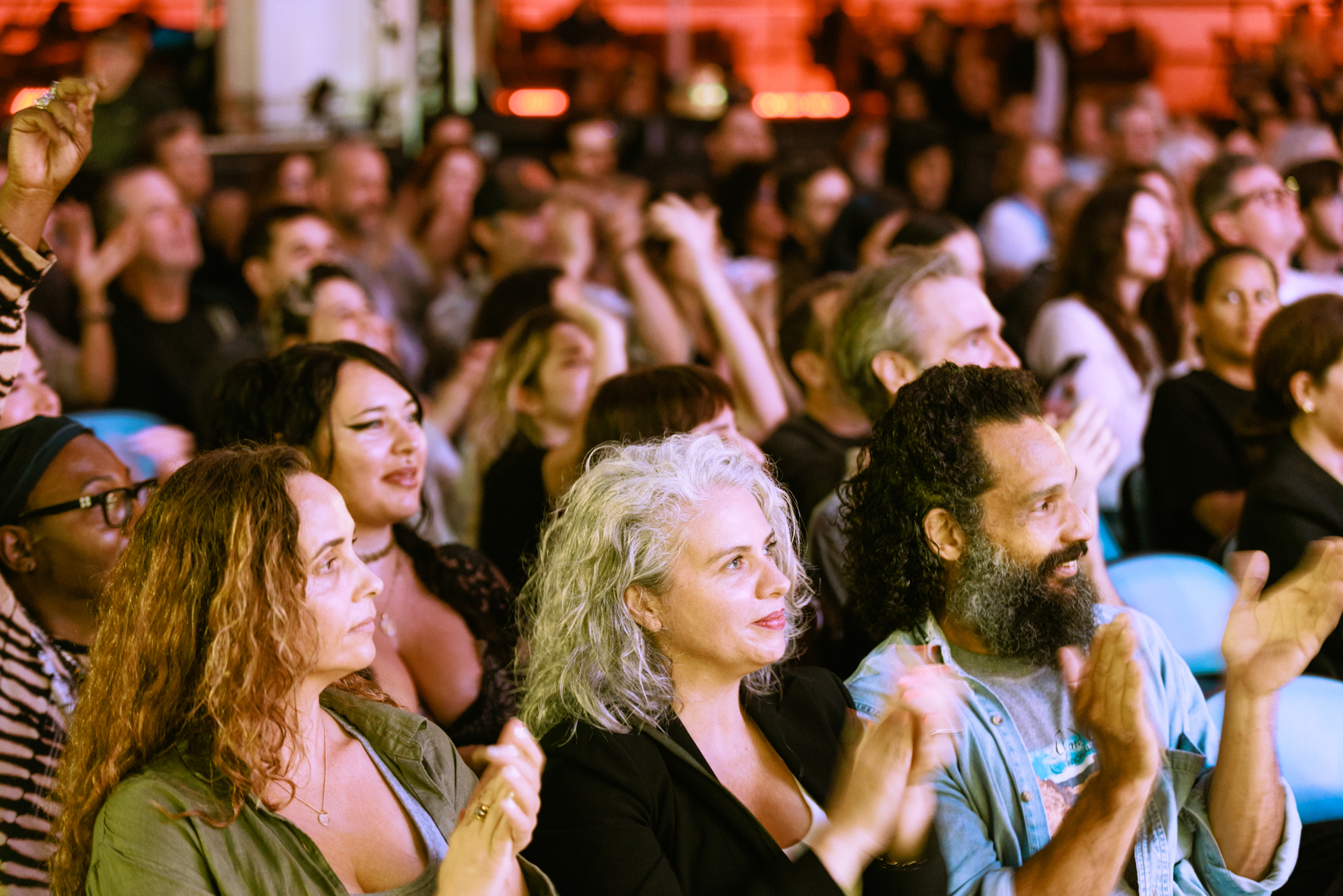
Years later, Brown saw McCraven at the Empty Bottle in Chicago, where the drummer has been based since the mid-2000s. After the set, they caught up, the way musicians and promoters do when paths keep crossing. The conversation drifted back to the pandemic, that universal question of where you were when everything stopped. For McCraven, the answer carries a Miami timestamp. One of the last shows he played before the world went dark was that Floyd date. His first show in Miami. The next morning, the city, and soon the rest of the country, went ghost town. Some tour stops fade. That one didn’t. It stuck, the way certain nights do, binding a city, an artist, and the people who showed up into the same memory.
Thursday marked his third appearance in the city and his second at the Bandshell, following a 2024 Tribeca performance. Montreux brings global weight, and Rhythm Foundation continues to anchor the venue’s programming, but this felt personal, a Chicago artist with a Miami history, booked by a local promoter who has tracked that arc from the beginning.
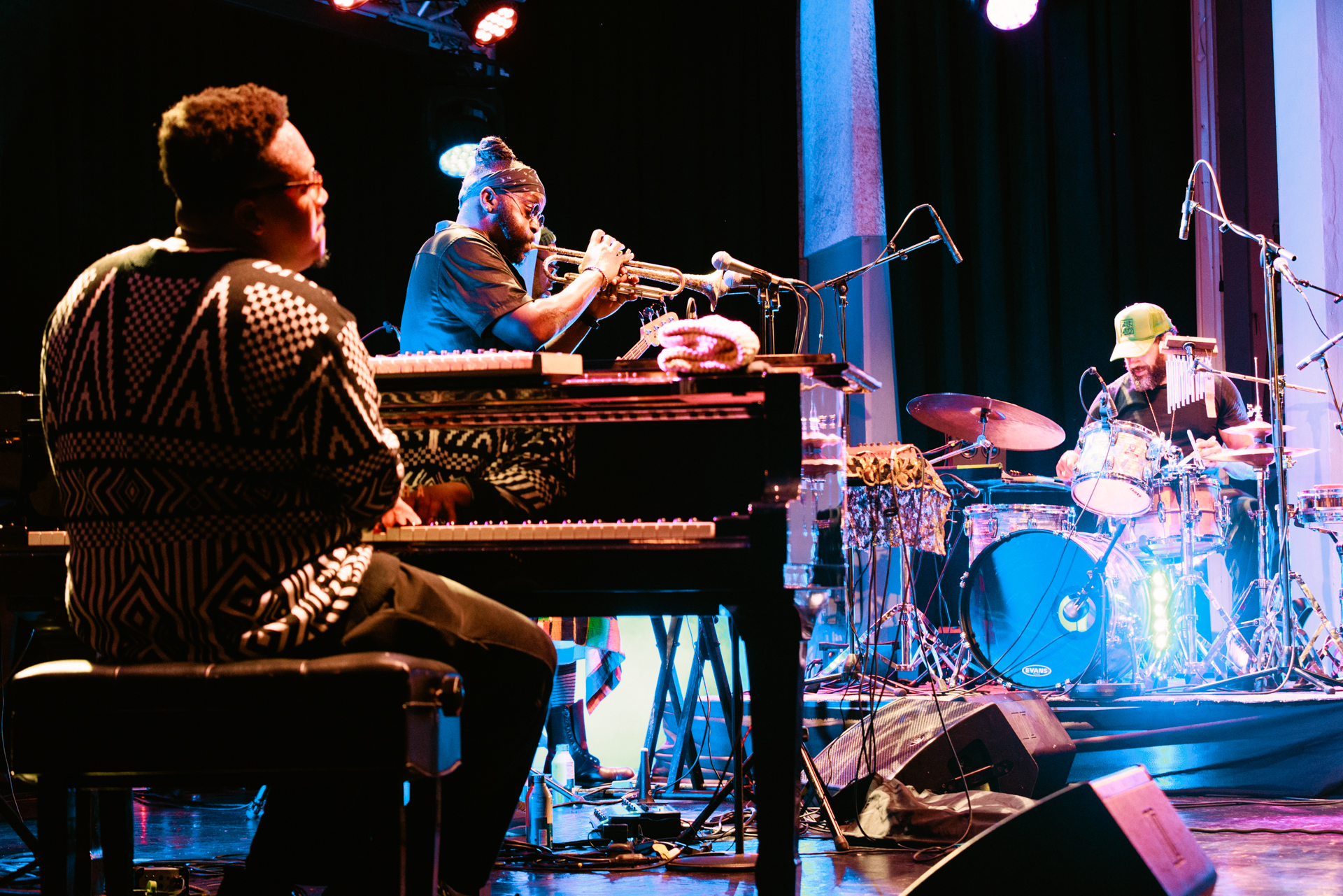
Outside, traffic kept moving. Inside, the band stretched grooves into long, elastic forms, precise drumming, conversational horns, rhythms that drew from hip-hop, electronic textures, and groove-based repetition without abandoning jazz’s core language. Nothing theatrical. Just musicians listening hard.
Off the record, McCraven edits and reconstructs improvisation in the studio. On the record, and in rooms like this, he lets it unfold without a safety net. In a city that changes fast, that kind of continuity feels worth noting.
Brainville’s next show arrives March 5 at Floyd, with Grammy Award-winning vocalist Bilal taking the stage. In Miami, making space for live music takes persistence. The rest depends on who shows up.
.png)


