For someone who began painting during the pandemic—likely as therapy, likely as release, perhaps even as revolt—the fact that 2026 brought Romanian artist Liviu Alexa two solo exhibitions in two of his country's most important art centers is an extraordinary achievement in the deepest sense of the word.
Just two months after his first solo exhibition, Liviu Alexa presents in Bucharest, at Kulterra Gallery, a second solo show: Filcai, which opened on April 16.

"Initially, I wanted to focus on a story centered around 'demons,' but then another idea came to me. It was right under my nose, in my own library: the tarot cards designed in the '80s by the magnificent Dalí," says Alexa. The story behind this remarkable artistic endeavor deserves to be known. It all began with a proposal from Hollywood for the 1973 James Bond film Live and Let Die, where producers needed a spectacular deck of cards for the character Solitaire. Dalí accepted immediately, but his enormous ego and exorbitant financial demands led the producers to abandon him in favor of another artist.
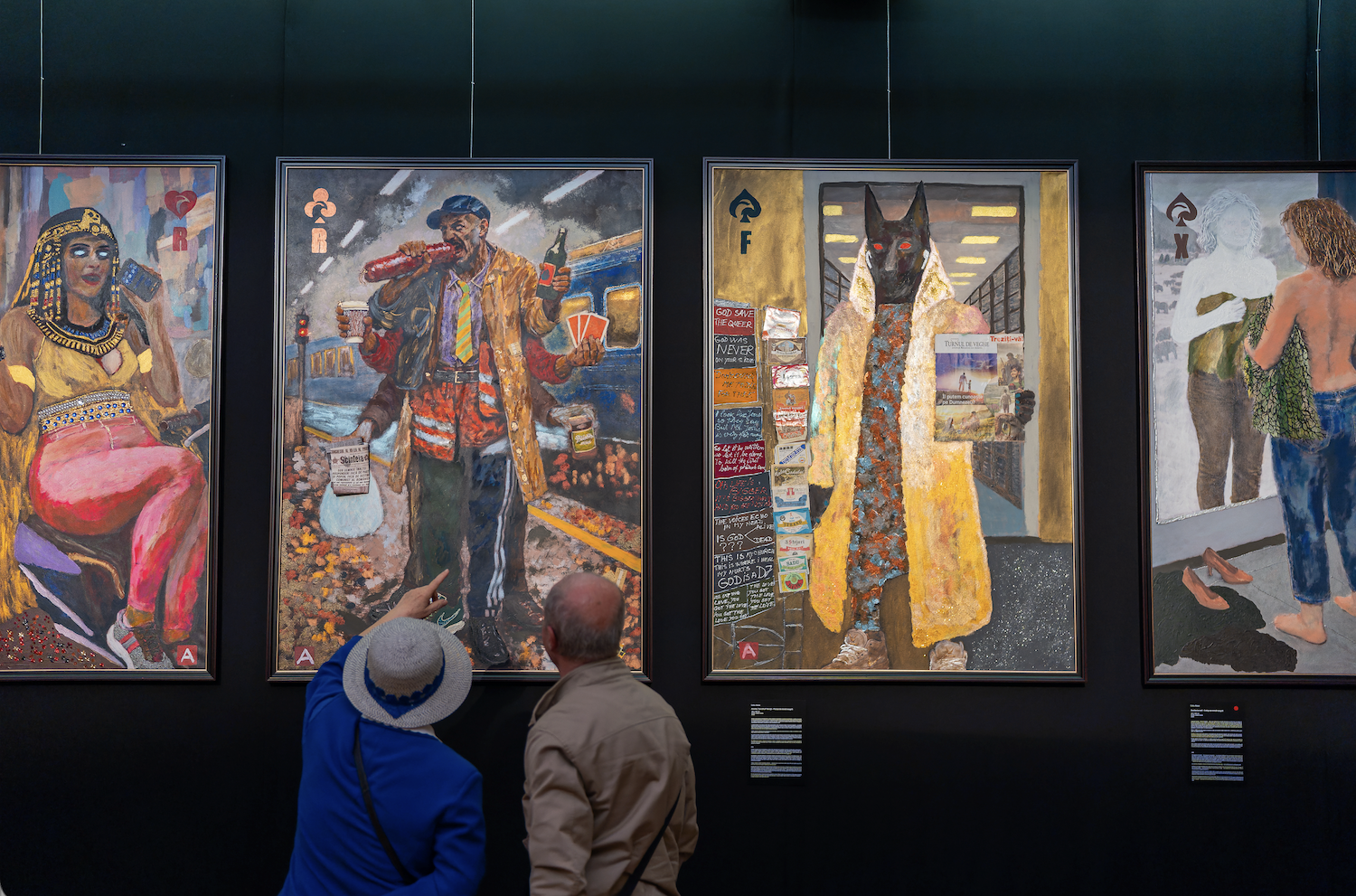
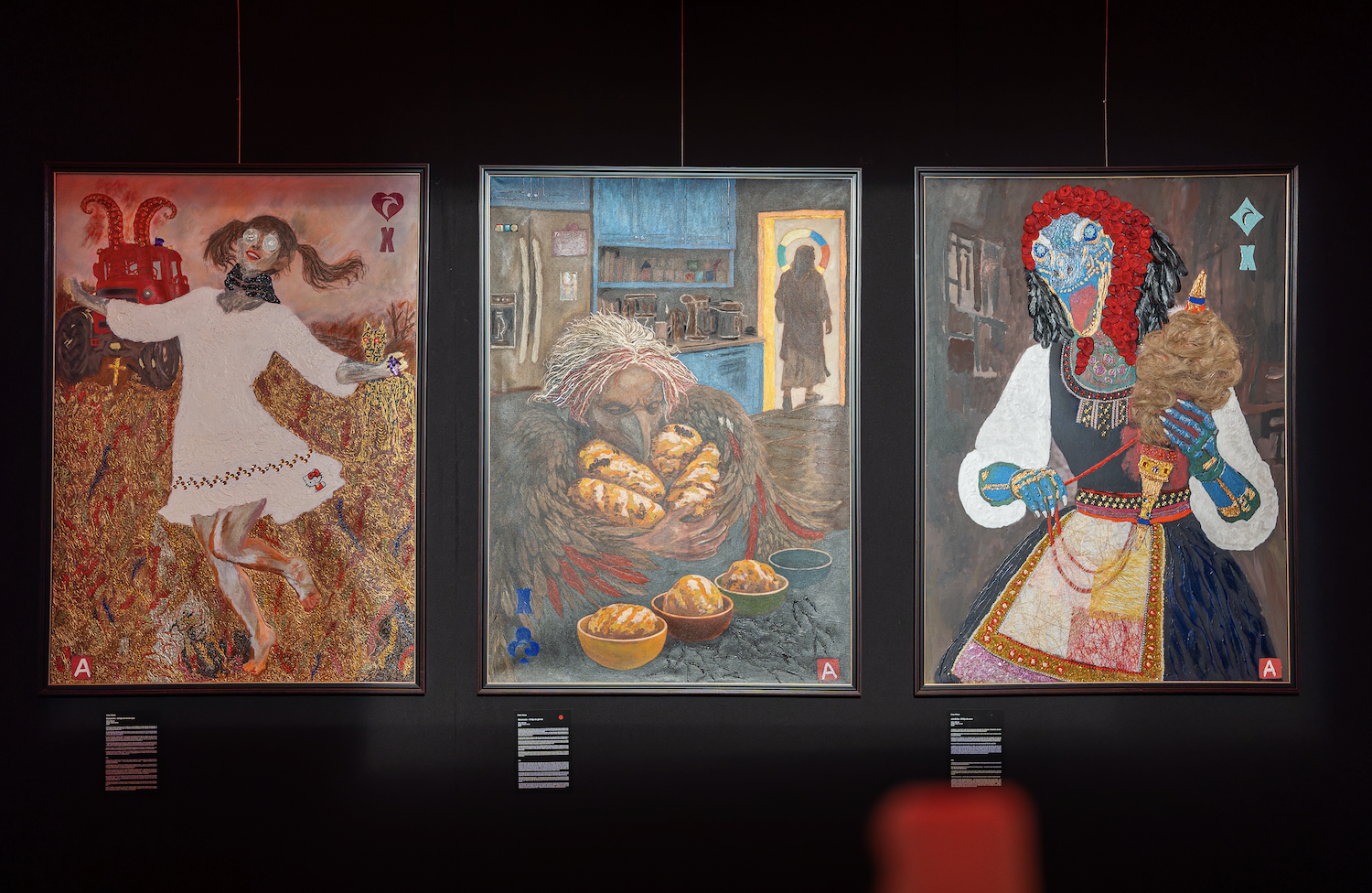
The artist realized that in Romania—more precisely in Transylvania, Dracula's famous "headquarters"—there exists a well-known card game called Filcai: the commuters' game, the game played at funerals or in neighborhood taverns, one that enjoyed incredible fame during the communist era. Starting from the pragmatic aesthetics of this "more plebeian" deck of playing cards, the artist proposes it as the foundation for his new exhibition, operating a resignification of its meaning.
Liviu Alexa offers an incursion beyond the playful facade of the cards—a round-trip journey: a veritable mise en abyme through which he probes both regional cultural identity and a vaster vision anchored in Romanian and universal mythology. From these explorations, Alexa returns with new distillations and meanings, offering the public interpretations and nuances that his postmodern condition permits.
The works in the Filcai exhibition were created in a span of just two months, which demanded a brutal volume of work and a ferocious effort. A form of self-flagellation to which Liviu Alexa, like a metamodern holy fool of art, willingly submitted, documenting it in the form of a video journal to which his followers had VIP access.
Those who attended the vernissage experienced a privileged encounter. The exhibition's curator, Lucian Nastasă-Kovacs, had the vision of an ideal blend between space, canvases, and light. In effect, the public was invited to experience the deck of cards from the inside, becoming part of the game. The rectangular space with black walls on which the arcana spring to life in brilliant colors, alongside red light descending upon visitors, created a fully immersive experience—just one step away from triggering Stendhal syndrome through exposure to a massive flux of images and symbols whose aesthetic force exceeds the viewer's immediate capacity for absorption.
.png)
If in We Are the Apocalypse, Liviu Alexa's canvases are meditations on transhumanism, on humanity surpassed by technology, in Filcai, the artist reveals his metamodern condition through sincerity, melancholy, and a desperate search for meaning in spirituality, in roots understood as identity, story, and myth. It is a hora of angels, dragons, and joimărițe, of deities in their death throes, into which viewers are magnetically drawn, relearning to dance to archaic rhythms that reverberate in their blood with the hypnotic, shamanic frenzy of the Ciuleandra melody.
Here, in a garage in Transylvania, surrounded by two dogs and stacks of books, a man who spent 27 years exposing corruption and documenting the darkest corners of society has found another way to tell the truth. Not through words this time, but through color and form and figures that step out of forgotten tales to remind us who we were before we forgot.
The cards have been dealt. The game has begun. And for once, the house doesn't win—the myth does.


.png)