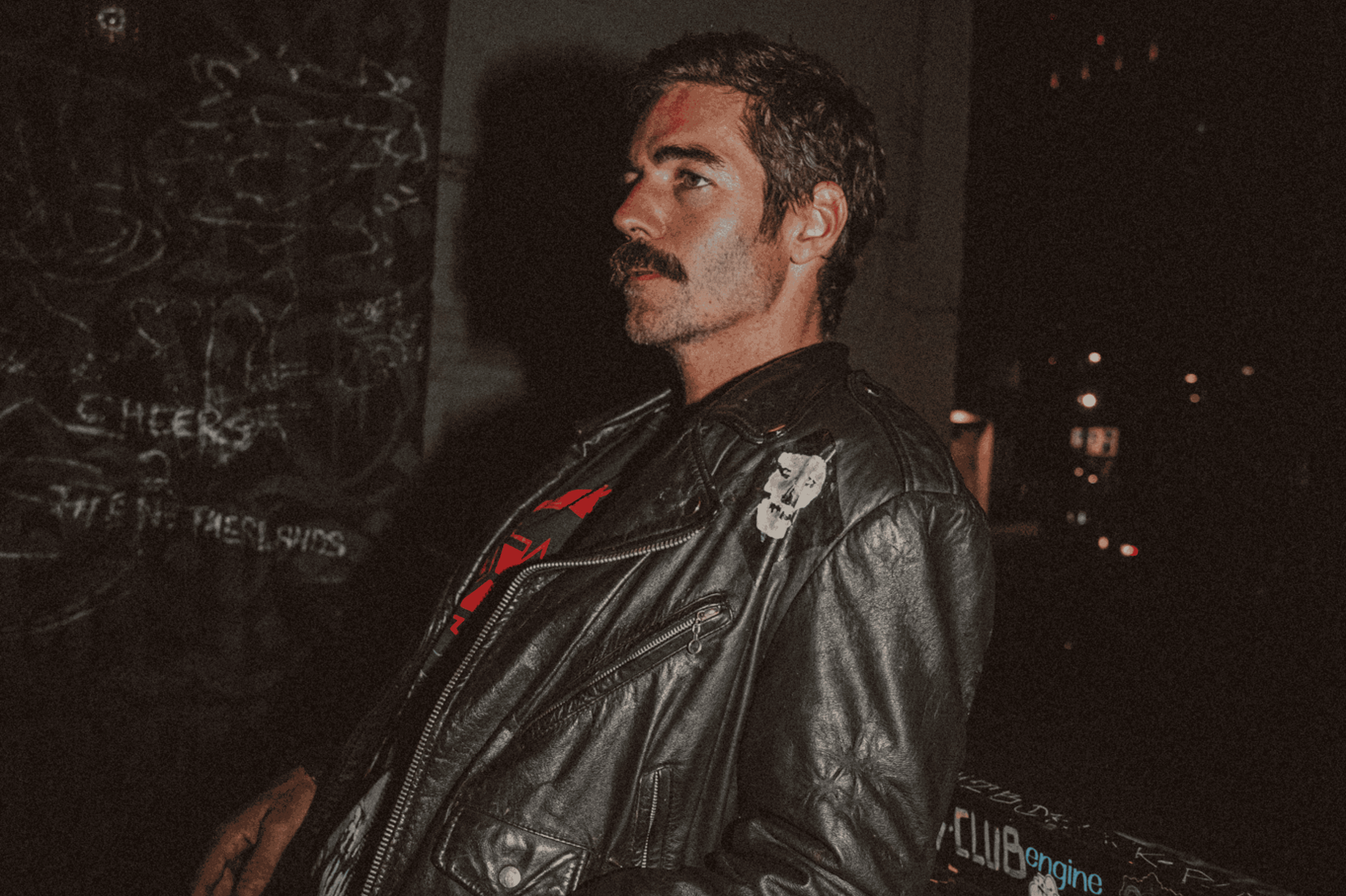
Producer, DJ, and creator of community-driven experiences, 8onthebeat has carved out a unique space by placing his cultural identity at the center of his artistic vision. The Mexican-American artist has built a career that defies labels by blending corridos, electronic music, club culture, and the everyday reality of those who grew up between two languages and two cultures. His sound, which he describes as “LA pocho,” has resonated with a generation that finds an authentic reflection of its own experiences in that fusion.
Those influences come into sharper focus on "pOCHO," 8onthebeat's first full-length studio album. Across the record, he expands on the LA pocho identity that has shaped his work, blending electronic production with sounds and perspectives drawn from Mexican-American culture. Among its standout moments is “teksi,” a collaboration with Deorro that pairs infectious club energy with the cross-cultural influences that run throughout the album.
As pOCHO introduces the most expansive version of his vision to date, we caught up with him to talk about identity, community, creative growth, and the road that led to his debut album.
“pOCHO” is your first full-length studio album. When did you feel it was the right time to leap into a long-form project, and how do you feel about the result?
Honestly, I felt like the time for me to jump into this long project was early on. As a creative, you want to release music instantly, right? So, as I was creating the project, I felt like a year ago it was time for me to drop it. I felt like I was ready, but at the same time, I wasn't ready because I needed to build momentum and also build what I call my supporters.
I don't really like the word “fans” for some reason. I just feel like they're supporters. They're there with you, and no matter what you do, they're going to support you, right?
At the time, I did have people following me, but I feel like now I've built such a great community that it's the perfect time to release it because A, Latin EDM is popping right now; B, I've built the community; and C, man, Latinos are coming in right now. It's just the perfect time to release something like this.
Summer is around the corner, too, so I feel like this is a good summer project, you know?
The concept of “LA pocho pride” runs throughout the entire album. What does that identity mean to you, and how does it influence the way you create music?
That identity means everything to me. It's my whole world. It's who I am.
Growing up, I was always shy about being who I am and being my authentic self. Even the way I talked, even the way I went about doing certain things. I didn't want to seem too Mexican or not Mexican enough. It was this weird middle ground where I was like, “Fuck, what do I do?”
English was my second language, even though I went to school here. My mom and my sisters came from Mexico, too, so it was hard for me. I developed what we call Spanglish. Sometimes I don't know how to say something in Spanish, so I'll say it in English. Other times, I'd think a word sounded similar, so I'd assume it was the same in Spanish, and it wasn't.
It was a weird time growing up, but now it means the world to me, and I wouldn't change it for anything because it's such a special feeling.
Every time I perform and my audience shows up, I see myself in them. I always get messages from people saying, “Dude, you killed it. We love how you mix our culture into dance music.”
Sometimes, even parents come to the shows and say, “Wait, I know that song. I wasn't expecting him to play that song,” or they'll recognize one of the songs we sampled and flipped into something new.
So yeah, it's pretty dope. I like it.
The album brings together corridos, electronic music, club culture, and Latin sounds. How do you manage to balance so many influences, some of which are quite far apart in terms of foundation, technique, and even overall vibe?
Honestly, it's not that hard to manage when you grow up listening to both. You're able to understand and process them at the same time.
Let's say I have a beat, and then someone comes in singing very much in the corridos style. I'll be like, “Dude, hold up, time out. Try doing this instead.” Then we adapt it. But they still keep that tone, that slang, that corridos flavor. You know what I'm saying? Because that's a whole thing in itself, it's almost like its own language.
So yeah, it's really about balancing everything. What's crazy is that when you're producing, it's all about experimentation. You throw something in and think, “All right, let me try this.” Then maybe, “Actually, let me add this too.” Sometimes it just clicks, and you're like, “Wow, that works.”
That's the beautiful thing about music and being creative. There are rules, sure. There are scales, there are certain structures when you're playing instruments, and we have genres. But at this point, genres are almost more of a marketing tool than anything else. If you really think about it, there aren't many hard boundaries anymore. Everything is blending with everything.
And I think that's beautiful because now you have artists like Karol G doing corridos, and they sound amazing. Then you find out there are places in Colombia where people listen to a lot of banda and regional Mexican music, and you're like, “Wow, I didn't know that.” It opens your mind and makes you more accepting of those connections.
Now we're taking elements from reggaetón and dembow and bringing them into Mexican culture. We have reggaetón mexicano. Who would have thought that? Back when Daddy Yankee first came out, nobody would have imagined hearing Mexican rappers or singers over reggaetón beats the way we do today. But now it's happening.
So yeah, it's cool. We get to experiment. We get to use all the musical knowledge we grew up with across different genres and blend it. When you've grown up with both worlds, it actually feels pretty natural. You understand it right away, and bringing those influences together isn't as difficult as people might think.
“teksi,” featuring Deorro, serves as the centerpiece of the project. How did this collaboration come about, and what do you think each of you brings to the song?
The song came about when Deorro reached out to me. He wanted to work on some music he was developing at the time, probably three or four years ago. We ended up working on his project and the music he was creating back then, but more importantly, we built a relationship. We became friends, close friends.
We started hanging out, going to his birthday parties, and going to Vegas to see him perform. We just became really cool, and eventually I was like, “Yo, let's work on something for my project.” He was down, so I sent him the idea, and he loved it. From there, we just kept building on it.
We actually played it at EDC Las Vegas when he headlined, and people really responded to it. They loved it. So we decided to keep developing it, extend it, and make it even better.
As far as what each of us brought to the track, I think I brought structure from more of a pop perspective, while he brought structure from an EDM perspective. We blended those two approaches. My mindset is usually verse, pre-chorus, chorus, then back into another verse. His mindset is intro, build-up, drop, breakdown, build-up; it’s a completely different way of thinking about a song.
Now that I'm DJing more, I totally understand that structure, but at the time I didn't. So he really brought that side of it.
He's also incredibly talented when it comes to sound engineering. It's honestly amazing. He can take a tiny sound clip and transform it into something that feels like an entirely different instrument. That's one of his superpowers.
On my side, I brought the vocals. As I mentioned earlier, those are our vocals, and we used AI tools to process them and push them into a different sonic space. So I brought those AI-inspired textures and vibes to the track.
Overall, it was a great collaboration. At the end of the day, we wanted to create something for our people and our culture. Yeah, it's techno, but it still has those cultural elements woven into it. You hear little details, little phrases, little moments that connect back to where we come from.
There aren't a lot of vocals in the song, but it's really a feel-good record, and I think we executed it really well.
Throughout the album, you collaborate with numerous artists. What do you look for in a collaboration, and which one surprised you the most during the creative process?
What I look for most in a collaboration is a spark. Once we create a song and it's finished, if I don't feel that there's something special there, then it usually doesn't move any further.
And it's never a waste of time. Every session teaches you something. Every beat that doesn't work out, every idea that falls short, it's all a lesson. It prepares you for the next time you walk into the studio. Maybe I didn't love the vocals, but I liked what I created musically, so I'll expand on that and take it somewhere else.
I also look for a connection. As a producer, part of your job is helping the artist feel comfortable and making sure they're in the best headspace possible so they can write the best lyrics and melodies. When I'm in a session, I like to contribute creatively too. I'll suggest a melody, recommend a different direction, tell them to bring the energy down, or maybe even suggest they rap a certain section. So I'm vocal producing as well.
But ultimately, I look for that spark and that connection. We're human beings, we're not meant to connect with everyone, and that's okay. Fortunately, most of the people I work with are just really cool. The process feels easy because we all genuinely love what we do. When you're passionate about the work, the collaboration becomes a vibe.
As for who surprised me the most during the creative process, I'd say Gabito Ballesteros. It's not that I was surprised by his talent; I already knew how talented he was. The guy can write and perform almost anything.
People know him for corridos felices and regional Mexican music, but the song we did together, “Sobras,” ended up becoming something closer to rock en español. Even the label was surprised. They were like, “Wait, we've never heard him sing like this before or do this kind of music.”
But for him, it felt effortless.
Honestly, it surprised me too because I'd never produced something quite like that before. But that's where the music was taking us, so we followed it and saw what we could build.
The song came after “Báilalo,” which is such a banger, so I was wondering how we could keep that momentum going while still doing something different. What we ended up creating was really unique. If you listen closely, it even has some country influences. There's a steel guitar in there, and that slide-guitar sound people make using a bottle on the strings. I added those elements, and then it evolved into this rock en español track.
So yeah, he probably surprised me the most. He's incredibly talented, and working with him was a great experience.
You've gone from community-driven and independent spaces to performing on stages like EDC Mexico and Sueños Festival. What lessons have those experiences taught you?
Those experiences have taught me a couple of things.
The first one is gratitude. There are so many artists and DJs who dream of having these kinds of platforms to showcase their talent, and unfortunately, most of them never get that opportunity. That doesn't mean they're not worthy of it or capable of doing it. It's just such a competitive industry.
Whether you're playing a huge stage or a small one, you have to stay grateful because there are so many people who would love to be in that position. A lot of people want that spot. So don't take it for granted.
The second lesson is to work harder.
Yeah, you've performed at these events, but then the next thought becomes, “Okay, now I want to be on the main stage.” You just keep pushing yourself. Some people might say that's not always healthy because you need to be able to sit with yourself and appreciate what you've accomplished, but that drive is also something a lot of successful artists have.
The challenge is making sure it doesn't become unhealthy. You don't want to reach a point where you're never satisfied.
I've definitely had moments where I've achieved things that I dreamed about, and instead of celebrating them, my first reaction was, “Okay, cool, but what's next?” I've caught myself thinking, “Yeah, that was great, but I want a bigger crowd. I want 50,000 people. I want 100,000 people.”
You start getting into your own head because you see your peers succeeding and naturally want to reach that level too. What you sometimes forget is that many of those people have been putting in the work for years before you ever saw their success. And even when someone's path looks similar, every journey is different.
Some artists reach those milestones quickly, others take longer, and some get there through completely different routes. At the end of the day, though, the lesson is the same: work hard, but stay grateful.
The Privadas con el OCHO events have become an important part of your artistic vision. Why was it essential for that community to be represented within “pOCHO”?
I mean, because they're pochos. It's really that simple.
They're a huge part of the reason why I do what I do. They understand it, they relate to it, and they connect with it. I'm incredibly grateful and blessed to be able to throw these parties because when I first started them, they were just an idea.
It actually started on my birthday. We're coming up on the first anniversary of Privadas in about two weeks. At the time, I just thought, “You know what? Let me throw a party and invite all my industry friends to a rooftop and play Latin EDM because nobody's really doing that here.”
So I decided to give it a shot. That was actually the first time I DJed for a lot of those people. Everyone knew me as a producer, but most of the industry didn't know I was trying to become a DJ as well.
The first event went well. The second one had around 200 people. By the third event, I started inviting more people, and then their friends told their friends, and it kept growing.
The turning point came when a girl who is now actually my social media manager for Privadas posted a video from one of the events on TikTok. It completely blew up.
By the fourth event, we had somewhere between 500 and 700 RSVPs. By the fifth one, we were getting 1,000 to 2,000 RSVPs. People just kept showing up.
Honestly, that's what launched my DJ career. I owe so much of that success to the community that supported these events from the beginning.
That's why it was so important for them to be represented in “pOCHO.” At the end of the day, they are pochos too. They're part of this story.
In fact, next week I'm doing a pop-up album release party through Privadas as a way of saying thank you. It's my chance to give something back to the people who helped build this movement alongside me.
So yeah, that's really the reason. They're pochos, they understand the culture, and they've been there with me from the start.
Looking back on your journey, from your earliest releases to this debut album, what would you consider the greatest achievement of your career so far?
The greatest achievement of my career so far is being able to play these venues and build genuine friendships with my peers, the people I respect and admire.
Another huge achievement is having the support of a community. People would pay to have that kind of support. I know that sounds funny, but it's true. At the end of the day, I see myself not only as an artist but also as a business. I have to approach things professionally because I'm constantly making business decisions and working with venues, promoters, and event organizers.
When they book me, it's not just because of the music. They know what I can bring to an event. They know I have a community behind me, people I can connect with and market to, people who are willing to show up and support what I'm doing.
So I'm incredibly grateful for that.
I'm also grateful for the people around me, the DJs I admire, the venues I've been able to play, and the new opportunities that keep coming my way. Sometimes I get offers from places where I used to dream about seeing artists perform, and now those same venues are reaching out to me because they want me to bring my energy and my vibe there. That's a crazy feeling.
At the end of the day, though, it always comes back to the community. I'm really big on that because without them, none of us would be here. And when I say "us," I mean all my DJ friends, all the artists I know who have found success.
We do this for ourselves because we love it, but we also do it for the people who support us. That's what makes it special.
.png)
Now that “pOCHO” is out in the world, what feels like the next chapter for you? Are there any projects, collaborations, or ideas you're especially excited to explore in the coming months? And while we're at it, should Miami start hoping for a live edition of Privadas con el OCHO anytime soon?
There's a lot to unpack there.
The next phase is definitely working on new music. From a DJ perspective, things have changed a lot for me because I only started DJing about a year to a year and a half ago. Producing and DJing are very different experiences. Now that I'm out there playing shows regularly, I can see what works live and what doesn't.
That gives me a whole new perspective when I'm creating music. I can take those lessons and apply them to future projects, making songs that have an even bigger impact when they're performed in front of an audience.
I also want to be more vulnerable in my music and in the way I present myself online. I want people to see different sides of who I am, not just Pocho the artist.
I'm a family man. I'm a dad. I'm someone who enjoys normal things like hiking, running, traveling, and spending time with family. Mental health is important to me. I go to therapy. I want people to understand who I am beyond the music and get to know the person behind the project.
So I think the next chapter will involve a lot more of that honesty and openness.
As for Miami, hopefully soon.
If somebody out there wants to collaborate or help us bring that energy over, we'd love to make it happen. I've been to Miami twice. The first time, I got sick while I was there for the Latin Billboard Awards, so it wasn't exactly the best experience. I was trying to enjoy everything while also dealing with a virus.
The second time was completely different. It was beautiful. I loved the weather, I loved the atmosphere, and the city just felt like a vibe.
I honestly think Privadas would fit perfectly in Miami.
So hopefully, if Dios quiere, we'll be able to bring it there, see what kind of energy it creates, and connect with people in a new way. I really feel like it would do well in Miami.
Are there any projects, collaborations, or ideas you're especially excited to explore in the coming months?
Yeah, definitely. There are a few collaborations I'm really excited about.
One of them is a song I'm working on with my friend Romy, who's an up-and-coming DJ from San Diego. I recently supported him at one of his shows in Los Angeles, I think it was at Exchange or Avalon, but don't quote me on that because there are so many venues that they all start blending. But yeah, I played support for one of his events out here, and we're currently trying to get a song released together.
I also have music with other local artists that I'm looking to put out. Since I'm planning to start working on my next album in July, I want to keep releasing music in the meantime, even if it's just singles I've had tucked away.
I want to keep the momentum going. As people say, I want to stay "hot in the streets." I want to keep putting songs out there so people continue to see what I'm doing and keep the project on their radar.
So yeah, I'm really excited about new collaborations. Hopefully, this album opens doors to working with even more DJs and artists. I'm always down to create new music and lock in with people.
July is going to be an important month for me because, while I still have shows coming up, I also want to get back into a dedicated creative routine.
The truth is, I haven't really sat down and focused on producing an album for about a year. I made a conscious decision to spend that time becoming a better DJ. I wanted to fully commit to learning that craft because DJing is a completely different skill set. If I'm going to do something, I don't want to do it halfway.
Of course, I still produced here and there. If one of my friends called and wanted to work on something, I'd jump in. But really, locking in and building a project from the ground up? I haven't done that in a while.
Now I feel ready for it again.
I'm excited to get back into that rhythm, start creating consistently, and approach these new songs from the perspective of someone who's spent the last year learning what works in front of a live crowd. I think that's going to have a huge impact on the music moving forward.
Connect with 8onthebeat: Instagram l YouTube

.png)