When talking about a classically trained artist born in San Antonio, Texas, with Korean heritage and now based in Mexico, it would be easy to picture her performing in a symphony orchestra. However, La Coreañera chose to shatter expectations and surprise audiences with a very different musical path, cumbia.
Unafraid to dismantle stereotypes one song at a time, she believes that her blend of cultures, sounds, and life experiences is far from a disadvantage; in fact, it has become her greatest strength.
Abigail Pak, the singer-songwriter behind the project, found in tropical music a language capable of bringing together every facet of her identity. Although she began her musical journey as a classical pianist and even performed at the prestigious Carnegie Hall at just 13 years old, it was the accordion and Latin music that ultimately shaped the direction of her career.
Her artistic vision defies preconceived notions. Combining a strong academic background with a deep appreciation for sonidera culture, La Coreañera has established herself as one of the most distinctive voices within the alternative tropical movement. Performances at SXSW, Vive Latino, and Resuena, along with her recent inclusion in Billboard On The Radar Latin, have further highlighted the growing attention surrounding an artist who approaches the genre from an authentic, contemporary, and deeply personal perspective.
We had the opportunity to speak with her about “KOREAKUMBIA,” the single that she feels finally captures the sound that best represents her as an artist. During our conversation, she shared how she incorporated elements that have shaped her musical journey, from piano and classical influences to the festive energy of the cumbia she loves to dance to.
“KOREAKUMBIA” has a very distinctive energy, where sonidera tradition blends with a contemporary identity. At what moment did you feel this song represented exactly who you are today as an artist?
I think the process that I had in the studio when I was composing this piece really was an important part of the result that I feel today of the song, because I included a lot of sounds that I've always liked.
For example, I used an organ. There's a sound of the organ that I use on the keyboard, and a lot of my inspiration comes from somebody named Gabriel Mesa. He used it on an album of cumbia, Colombian, and Mexican songs, featuring an organ throughout the entire soundtrack.
I really like the sound of the organ because it reminds me not only of tropical music but also a little bit of classical music. I've always used that sound, and I decided to incorporate it much more into this song. I also wanted the piano to have a bit more protagonism because, after all, while I'm known as an accordionist, I'm also a pianist, right?
So I tried to be 100% involved in every single instrument and every part of the composition process. Every accordion part, the harmonies, and even the percussion, I worked all of that out with my band's percussionist. I had a lot of suggestions; we exchanged many ideas, and at the end of the recording session, my percussionist said to me, “We're not experimenting anymore. This is really you. I listened to it with my curator, and this is very you.”
I told him, with a smile on my face, “I think that's a good thing.” I know that every single day we're going to learn something new and that a lot of things will change because it's only been a year since we started the project. But I really feel like we're getting close to unlocking the right sound, and this sound really makes me feel content and satisfied.
I think it brings together all of my preparation as a musician coming from the classical world, along with the flavor of being part of the cumbia world.
The track combines accordion, brass, and a very festive tropical vibe, but it also conveys a lot of personality. Beyond making people dance, what did you want to express emotionally with this song?
I think that something that's always been a part of my project is happiness and joy through music. I know it's related to making people stand up and dance because the song talks about, “Hey, don't stay seated,” right? It's kind of like, “Why don't you stand up and dance?” That's something I always think about when I go to a party.
When I go out, I don't drink, and I don't really do anything except dance. I go to dance cumbia. So when I see people at parties who don't get up and dance, I'm always like, “Come on, guys, you're so boring!” I feel like I should be the person who gets them to go to the dance floor.
I think it's a song that translates a lot of the joy I feel when I listen to music, especially cumbia. It's also an encouragement to other people, a reminder that it's your space and that you can just have fun.
.jpg)
How has your experience as a Korean-American artist living in Mexico influenced the way you understand and create cumbia?
I think it's given me a broader vision of my cultures. I take a lot of things from being Korean, things that make me proud because of my parents and the way I was raised, as well as things I've learned through my own way of being, talking, and expressing myself in Mexico.
Many things make me proud of the person I've become through these experiences. I think that the idea of cultural identity can be great sometimes and not so great at other times, depending on how you look at it.
Coming to Mexico and living in a place where, compared to my parents' culture, people seem more relaxed but also very resourceful, has taught me a lot. When something doesn't go right, people often find another way to solve it. That's something I didn't really have in my mindset before coming to Mexico.
Before, I used to think, “I have to do this, and if I don't, then maybe I'm a failure, or maybe people will think less of me.” In some ways, that mindset helped me become disciplined in what I do.
At the same time, moving to Mexico taught me how to express myself and talk about my emotions, which wasn't something I really did with my family. It wasn't a big part of the culture I grew up in. Learning to communicate better and express myself openly has helped me mature a lot as a person.
It's helped me learn how to care for other people, how to be warm toward others, and how to work hard in a different way. The idea of what it means to be hardworking can vary greatly from one country to another, and experiencing those differences has had a profound impact on me.
You started in classical music and even performed at Carnegie Hall before focusing on tropical genres. What did it feel like to leave behind that more traditional path to pursue something much more personal and risky?
I think, to this day, I still think about it sometimes and ask myself, “What would it have been like if I had just stayed in the orchestra?” I had a secure position there; I was comfortable and things like that.
But I also felt that there was something I wasn't getting from classical music personally. I wanted to get up and dance. I wanted to do choreographies on stage. I wanted to sing with my classmates, my partners, and the people in my group.
There are a lot of musicians in the classical world who also play tropical music, but when you're specifically in an orchestra, sometimes you feel a little restricted, not trapped, necessarily, but there are certain expectations. You have to be a certain way. You have to be very formal, very polite. Once you step outside that space, you can release all the other energy you have.
I love classical music, and whenever I have the opportunity to play in a classical ensemble, I absolutely will. I miss it a lot. It gives me a lot of nostalgia.
At the same time, being in tropical music has made me realize how challenging it is because my presence is involved in everything. I have to think about all the people who are part of the project. I have to think about what we're going to play and how everything will come together.
When I was a classical musician, I mostly followed someone else's direction. Now, everything starts from scratch, finding people, hiring musicians, making arrangements, recording, and being responsible for all of those aspects.
For me, leaving classical music meant stepping away from something that felt more secure. But I think it has been completely worth it because I've been so excited about this project. It's something I've always wanted to do: play with my musicians, play with my friends, and create music together.
There's also so much room for creativity, which is something I don't think I had as much of when I was in the symphonic band. Of course, there are many new proposals and innovative ideas happening in classical music today, and there are exciting projects that blend genres and experiment with new approaches.
But honestly, I've felt the most creative with this project. At one point, I told myself, It has to be worth it, and I truly feel that it has been.
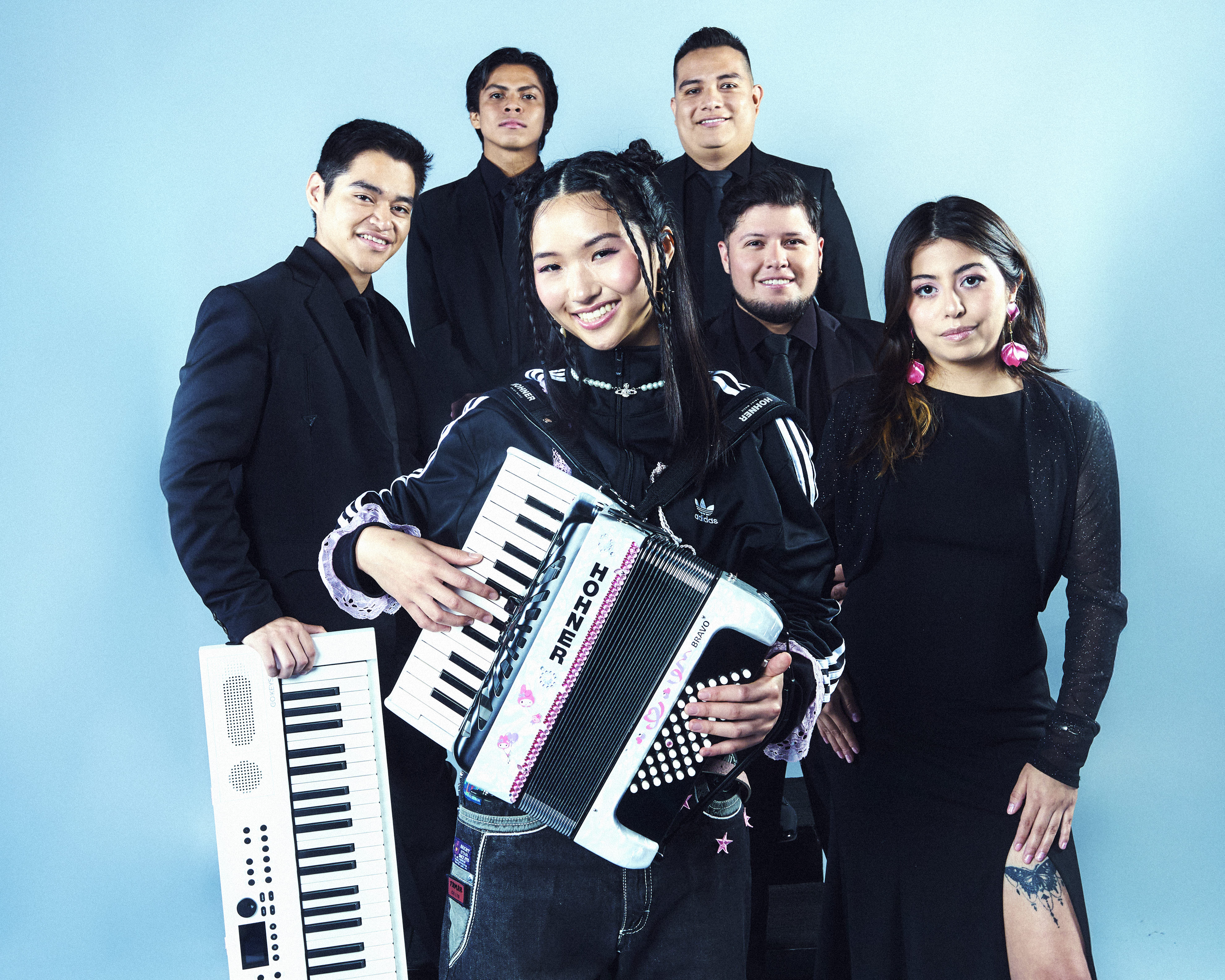
"KOREAKUMBIA" came together with Leonardo Valenzuela on production and Oscar Iván Calderón González on songwriting. What did that creative process look like from the inside?
So my first interaction was with Oscar (Oscar Iván Calderón González), and we went into the studio. He asked me, “How do you like to work?”
And I said, “Well, I always start with my instruments first, and then I look at the other sections.” Primarily, I'm a musician, right? I told him, “I sing for my projects, but I don't really consider myself a singer because my strengths are in other areas. I really love the piano and the accordion.”
He said, “Okay, I'll help you out with the lyrics. If you want to start with an instrumental base, we can work from there.”
So I started working on the music. We actually put the entire song together in less than three hours.
I created the instrumental foundation for the track, and then I told him, “Look, this is a section where I feel like we should have a chorus.”
He said, “Okay. How about something like this?”
From there, we started exchanging ideas. He would ask me, “What kinds of things come to mind when you listen to this?”
And I said, “Well, maybe the theme could be about when I go to a dance, and people are there, but they don't actually dance.”
So we began developing that idea together. After the session, we sent the demo to Leo (Leonardo Valenzuela), the producer. He listened to it, sent us a few references, and told me, “I've been listening to some of your favorite bands because I want to understand where you're coming from.”
That was something I really appreciated. He took the time to listen to the music that inspires me and understand my influences before moving forward with the production.
Once we got into the studio, we started recording right away. We tracked all of the percussion together, essentially live, which gave the song a very natural energy.
The whole process moved pretty quickly, not because we were rushing, but because I had a very clear vision of what I wanted, and the people working with me understood it immediately. That made everything feel very easy and natural from the beginning.
You’re featured on “La Pena” alongside Los Mirlos, a legendary group within Amazonian cumbia. What did it mean to you to collaborate with such influential artists in Latin American music?
For me, it was really special when I heard the news.
They told me, “You have an invitation to record this song. You're going to Colombia and play with them.”
At first, I was really shocked. Of course, I knew who they were. I had been listening to their music for a long time, but I never imagined something like that would happen. I was in Mexico, and while I had already had opportunities to interact with Mexican artists I had looked up to for years, the idea of going to Colombia and working with artists from another country felt like something completely different.
Obviously, Los Mirlos are legendary in psychedelic cumbia and Peruvian cumbia. So when I went to record the song, everything happened very naturally. In a way, it was almost improvised. It was more like, “Just come, and we'll see what happens.”
When I arrived in Colombia, they were presenting material from a new album. That day I felt really special because I knew those songs were important to them and part of something meaningful in their careers. So the fact that they invited me to be involved made me feel incredibly honored.
I thought, “They considered me. They wanted me to be part of this.”
Later, they came to Mexico, and we were able to do some things together there as well.
For me, it has been a really, really wonderful experience because it exposed me to a style of cumbia from a place I wasn't as familiar with. I've always been much more immersed in Mexican cumbia.
Being able to experience cumbia from another country, where people love the genre just as much as I do but play it differently and bring their own style to it, was something very special. It was amazing to share that experience with them, and it remains a huge honor for me.
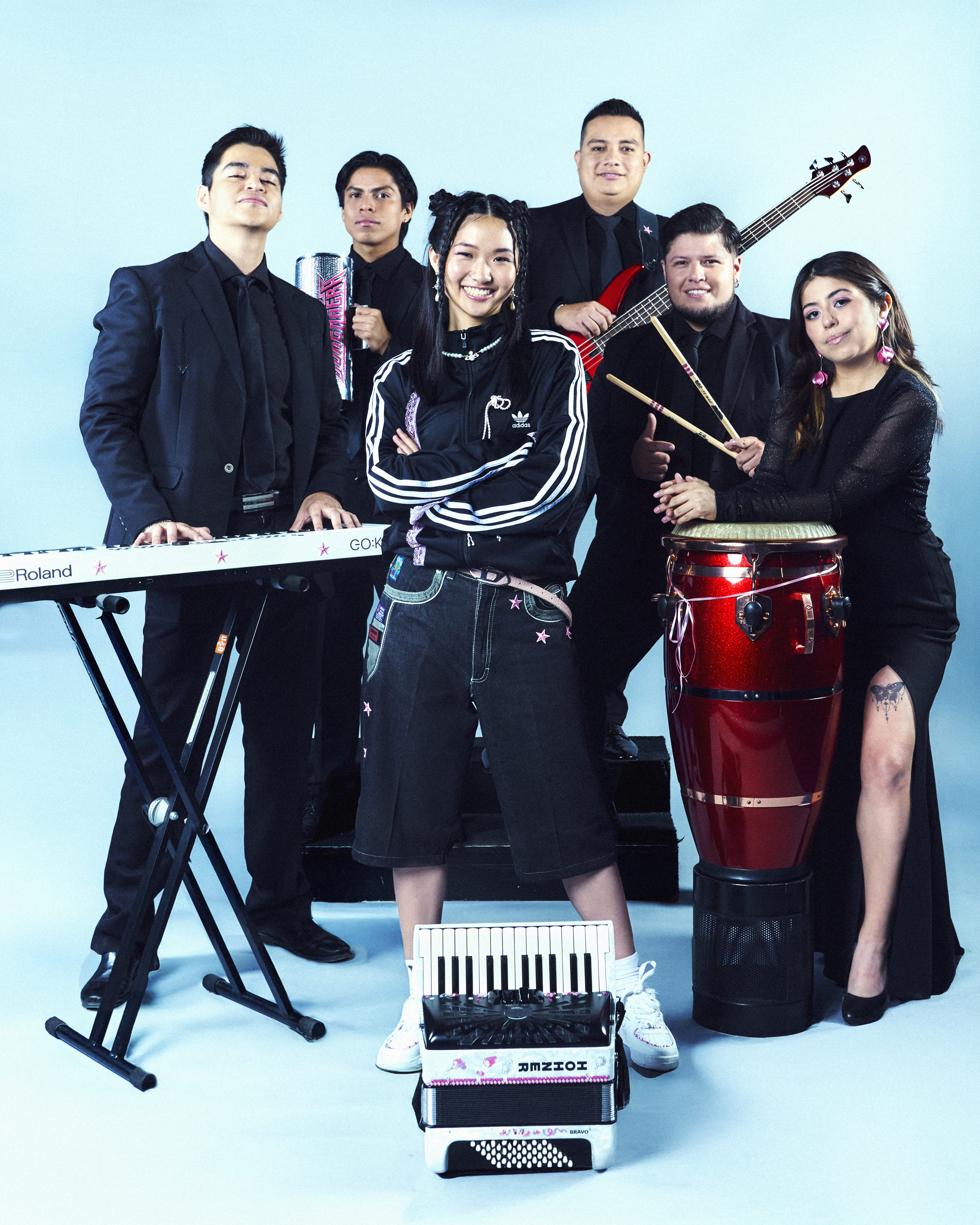
Your live shows have a very strong mix of romance, celebration, and performance art. What do you hope people take away after seeing a La Coreañera concert?
There are a lot of things I'd like to communicate, especially to younger people and to those who come to watch me perform.
First of all, I'm very grateful to the people who support me, listen to my music, and come to my live shows. The main thing I want to transmit is the joy that I feel when I listen to music and my desire to make other people dance the way I love to dance. I think that's something really beautiful.
But there's also something else that's very important to me. Being a woman, having my own group, and being the owner and leader of my project is something I want people to see. More importantly, I want other women and young girls to see that it's completely possible.
There are a lot of hardships that come with it. Some people will underestimate you, treat you unfairly, or make assumptions about what you're capable of. Unfortunately, that's something I've seen happen to many women in the industry.
Being able to represent that reality gives me a lot of motivation to keep going because I know people are watching. I also do it for myself because it's a privilege to dedicate your life to something you truly love.
I genuinely love this project. I love being able to communicate the joy I feel on stage, invite people to dance, and remind them that music doesn't have rules or barriers. Anybody can do anything. Anybody can dance however they want, sing however they want, and play whatever they want.
A lot of people look at me and, based on my physical appearance, assume that there's no way I do what I do. And for me, it's completely normal. It's not supposed to be extraordinary or something that surprises people. I simply do it because I love it, and that's the only reason.
With Festival ARRE on the horizon and all the growth you’ve experienced recently, what can you tell us about the next steps for your project? Are there new songs, collaborations, or even an album on the way?
Every month, I'll be releasing a new song, and all of those releases are part of the new album that's coming out in October. So from now on, there will be new music very frequently, along with new videos and new projects.
We also have a lot of shows coming up here in Mexico City, including appearances at different festivals. After that, we're going to perform at ARRE in September and also at Dale Mixx in Monterrey.
I'm very excited because we get to experience different kinds of audiences. The shows here in Mexico City are very “cumbianeros,” people come specifically to dance and enjoy cumbia.
At the same time, having the opportunity to perform at larger festivals is incredible. It's an amazing opportunity to be there, to represent what we're doing, and to share our music with new audiences.
I'm really looking forward to everything that's coming next.

.png)